AC Blowing Warm Air in the Heat? Here's What's Wrong
Quick Answer: When your AC is blowing warm air, the cooling cycle has quit somewhere between the thermostat and the outdoor unit. Usual suspects: a wrong thermostat setting, a tripped breaker, a clogged filter, a frozen coil, low refrigerant from a leak, a dead capacitor, or a failing compressor. A few of these you can check yourself in a couple of minutes. The rest, especially anything touching refrigerant or electrical parts, belong to a licensed technician. This guide walks through each one so you know what you're dealing with and what to do next.
You drop the thermostat, you wait, and the vents keep pushing air that feels like a hair dryer. On a brutal afternoon that's not just annoying. It's the kind of thing that turns the whole house sour within an hour. Here's the reassuring part: warm air from a running AC almost always points to one of a handful of specific failures. Once you can read what your system is telling you, the fix gets a lot clearer. Let's start with the easy stuff and work toward the parts that need a trained hand.
Start With the Thermostat and the Power Supply
Rule out the two things that fool people most before you assume the worst. Both cost nothing to check, and together they solve a surprising number of warm-air calls.
Thermostat settings
A thermostat bumped to "heat" or left with the fan on "on" is a classic trap. On "on," it blows even when the system isn't cooling. Switch to "cool," set several degrees below the room reading, put the fan on "auto," then recheck.
A tripped breaker or blown fuse
Your AC runs on two circuits, one for the indoor blower and one outdoors. When the outdoor circuit trips, the blower keeps moving air while cooling goes dark. Reset the breaker once. If it trips again, stop, leave it off, call a pro.
Dead thermostat batteries
On battery-powered thermostats, a weak set can scramble the signal to your system. Swapping them takes two minutes and is worth trying before you dig deeper into anything more complicated. A fresh set may quietly restore the cooling you expected.
Airflow Problems: The Dirty Filter and Frozen Coil Connection
A big share of warm-air complaints trace back to one root cause: airflow. When air can't move freely across the system, cooling falls apart, and the two problems below feed each other.
A clogged air filter
Your filter catches dust and pollen so they don't coat internal parts. Pack it full and it chokes the airflow the system needs to cool. Hold it to a light. Can't see through it? Replace it every 30 to 90 days.
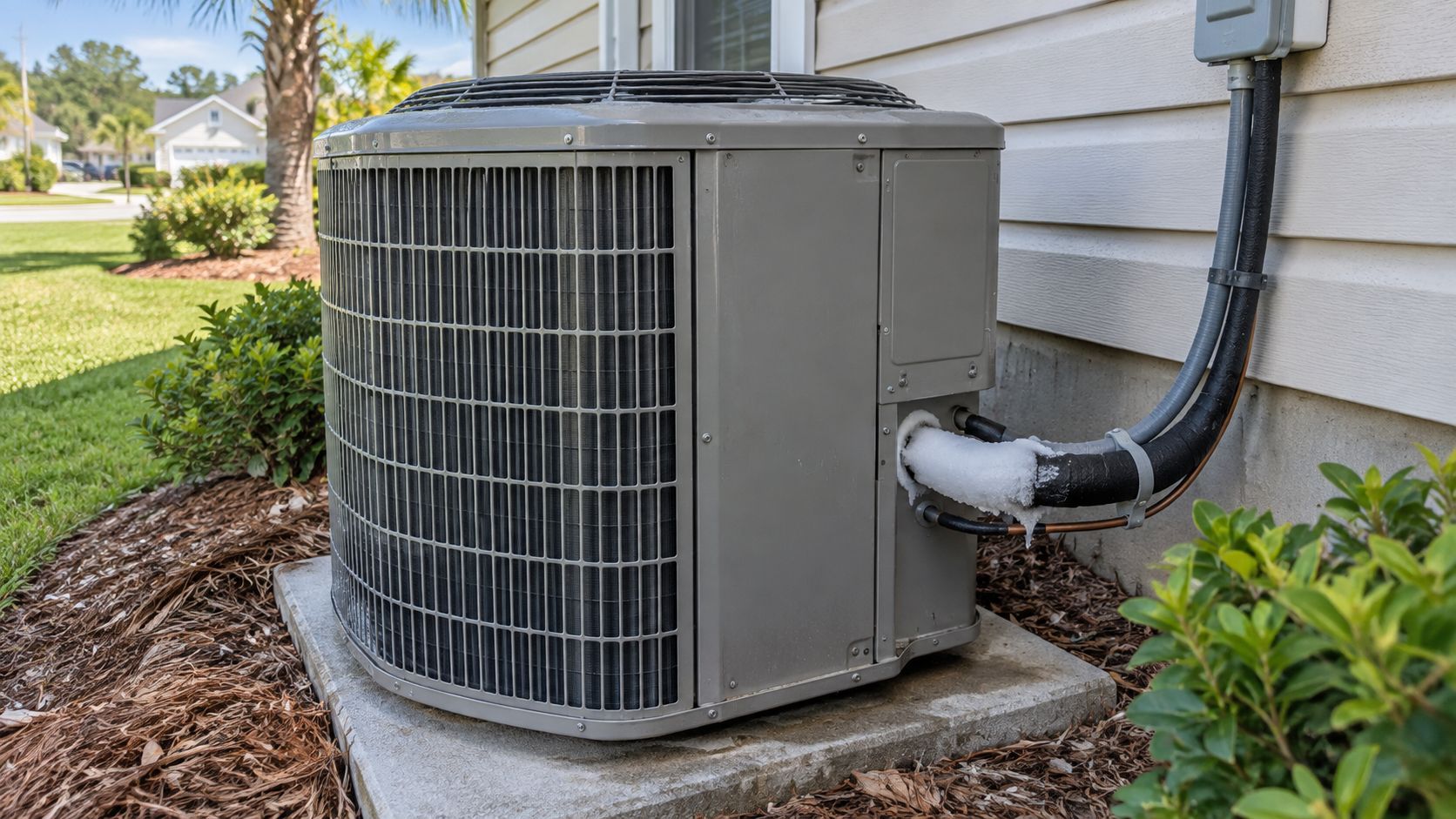
A frozen evaporator coil
Restricted airflow or a refrigerant problem can drop the coil below freezing until ice forms. Iced coils block heat transfer, so air turns warm even running full tilt. Watch for frost and pooling water. Shut it off, thaw fully, never chip ice.
Blocked vents and returns
A couch parked over a return vent, or closed supply registers around the house, can starve the system of the air it needs to circulate. Walk the rooms and make sure nothing is covering the grilles, then recheck your airflow.
Tip:
Set a phone reminder to eyeball your filter on the first of every month through cooling season. In a dusty or busy home you may burn through one a month, and that single habit heads off a big slice of frozen-coil and warm-air trouble before it ever starts.
The Causes That Need a Licensed Pro
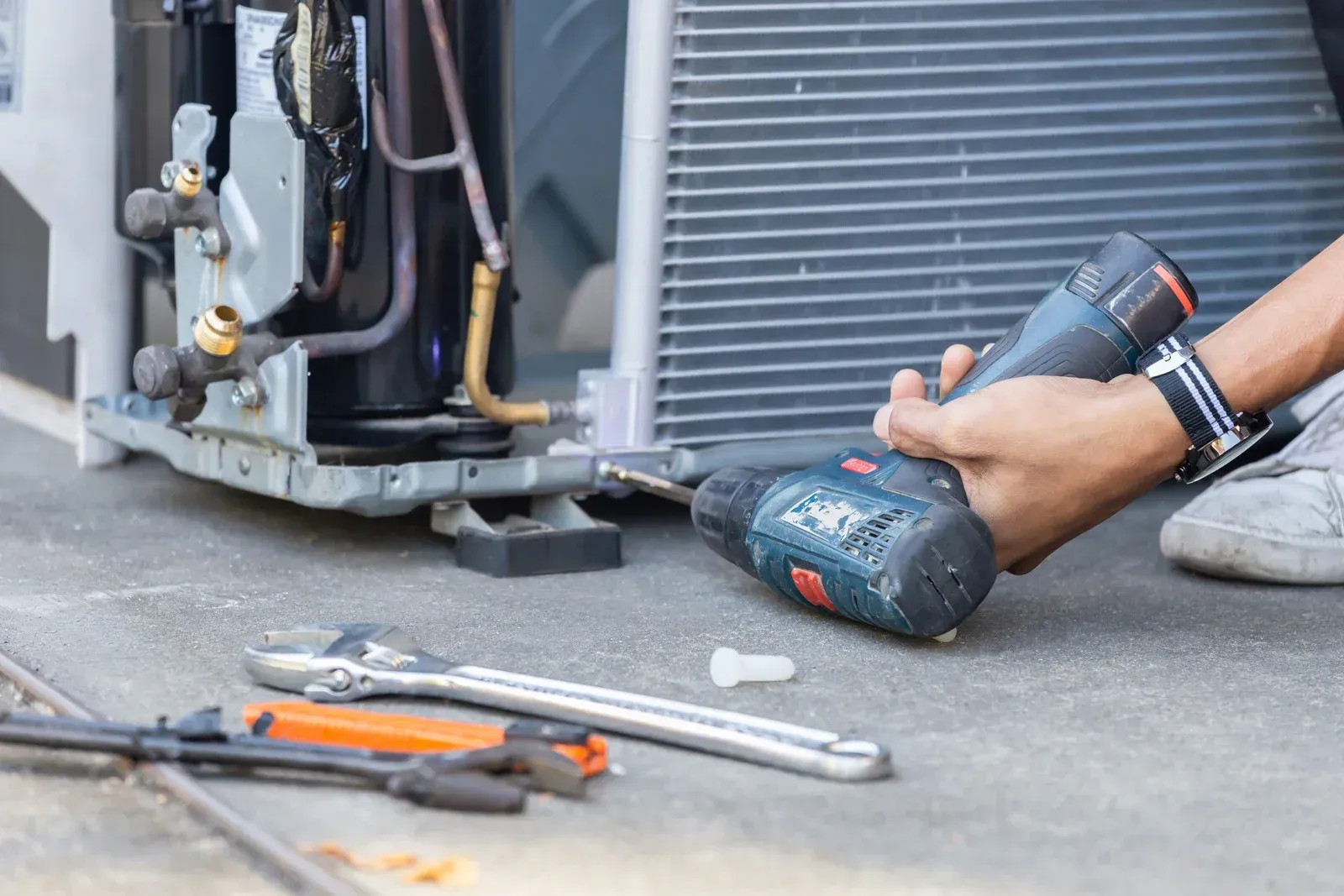
Once the simple checks come up empty, the remaining causes live inside sealed refrigerant lines and high-voltage parts. This isn't DIY territory. Knowing what each one is still helps you describe the problem clearly when you call for service.
Low refrigerant from a leak
Refrigerant soaks up indoor heat and carries it outside. It doesn't burn off, so low levels mean a leak. That weakens cooling and freezes coils. Homeowners can't legally handle refrigerant. A certified tech finds the leak, repairs it, and recharges to spec.
A dead capacitor
The capacitor gives your compressor and fan motors the jolt to start spinning. When it fails, often after years in the heat, warm air is the tell. Listen for a hum that never spins up. Capacitors hold a dangerous charge, so leave testing to a tech.
Condenser and compressor trouble
The outdoor condenser dumps collected heat. Cake its coil in dirt or salt and cooling drops. Rinsing loose debris is homeowner-safe. The compressor inside is another story: it drives the whole cycle, and diagnosing it belongs entirely to a
licensed HVAC company.
Warning:
Refrigerant handling, capacitor testing, and any repair touching your system's electrical parts carry real risks of chemical exposure, severe shock, and worse equipment damage. Federal rules require that refrigerant be handled only by EPA-certified technicians. Leave anything past the thermostat, filter, breaker, and a gentle exterior rinse to a licensed pro.
Why Warm-Air Problems Hit Harder on the Gulf Coast
Life along the Alabama coast puts a stress on air conditioning that homeowners in milder places never deal with, and it shapes which failures you're most likely to see.
Heat that never lets up
Around Gulf Shores, Orange Beach, Foley, and Fairhope, the cooling season drags on for months, and systems run close to round the clock. That constant load grinds on capacitors, compressors, and motors, so failures surface sooner and at the worst moment.
Thick humidity
The heavy coastal air means your system wrings out huge amounts of moisture on top of dropping the temperature. That humidity can tip a borderline airflow problem straight into a frozen coil, since there's more moisture around to freeze onto a cold surface.
Salt air and corrosion
Homes near the water fight salt-laden air that eats at outdoor coils, fins, and connections. That corrosion chips away at the condenser's ability to release heat and wears the contacts keeping your compressor running, so coastal systems need professional eyes more often.
Storm season and power hits
Summer thunderstorms and hurricane-season outages send power surging and cycling, which is rough on sensitive parts like capacitors and control boards. A nasty storm can leave your system blowing warm the very next morning, right when you need cooling most.
DIY-Safe Checks vs. When to Call a Pro
Knowing where the line sits saves you time, money, and risk. Here's the clean split.
What you can safely do yourself
Confirm the thermostat sits on "cool," fan on "auto," set below room reading. Change its batteries. Reset a tripped breaker once. Swap a dirty filter. Keep vents clear. Rinse the outdoor fins. Find a frozen coil? Shut it down and thaw.
When to pick up the phone
Call a licensed technician if the breaker trips again, if you suspect low refrigerant or see returning ice, if the outdoor fan won't turn, if you hear grinding, or if every safe check fails. Refrigerant, capacitors, and compressor work is professional, full stop.
Frequently Asked Questions
Why is my AC blowing warm air but the fan is still running?
The blower works while the cooling side has quit. A tripped breaker, dead capacitor, or compressor problem shuts the outdoor unit while the fan runs. Check your thermostat and breaker first. If those look fine, call a pro.
Should I turn my AC off if it is blowing warm air?
Yes, usually. Running a system that isn't cooling strains the compressor, the priciest part to replace. A frozen coil or low refrigerant only worsens as it runs. Switch it off, work through safe checks, and leave it off if needed.
Can a dirty air filter really make my AC blow warm air?
Absolutely, more than people expect. A packed filter chokes the airflow the system leans on, weakening cooling and freezing the coil until ice blocks it. Replacing the filter is the easiest fix here. Make it a monthly habit.
Why does my AC freeze up and then blow warm air?
A frozen coil usually comes from restricted airflow or low refrigerant from a leak. Iced coils can't absorb heat, so air turns warm. Shut it down, let the coil thaw fully, then change the filter. Recurring freezing needs a tech.
Is it safe to add refrigerant to my AC myself?
No. Refrigerant is regulated and federal rules require EPA-certified handling, and it can hurt you if mishandled. Low refrigerant always means a leak, so adding more without repair wastes money. A licensed pro finds the leak and recharges correctly.
How can I prevent my AC from blowing warm air in the future?
Regular upkeep is your best defense. Change filters on schedule, keep the outdoor unit clear, and keep vents open. Book professional maintenance yearly, or twice given coastal salt air and humidity. A tech catches weak parts before they fail.
Getting Cool Air Back
Warm air from a running AC is your system pointing straight at a specific problem, and now you can read the signs. Start with the free checks: thermostat, breaker, filter, vents. Those alone put plenty of homeowners back in business within minutes. When the trail leads to refrigerant, a capacitor, the compressor, or a breaker that won't hold, that's your cue to bring in a licensed professional instead of gambling with your safety or your equipment. Speed matters most in the coastal heat, where a small issue left running can snowball fast.
When your AC is blowing warm air and the coastal heat is climbing, you deserve cool, dry, reliable comfort restored fast and done right. Wynn Creek AC
has spent 10
years diagnosing exactly these problems, from frozen coils and refrigerant leaks to failed capacitors and struggling compressors, for both homes and businesses across Gulf Shores, Alabama. With heat-pump and indoor air quality expertise, 24/7 emergency response, and Generac standby generators to keep you protected through storm season, help is ready when you need it. Reach out to Wynn Creek AC
today to schedule your service and get comfortable again.