AC Running Constantly but Still Humid Inside?
Quick Answer: An air conditioner that runs nonstop but leaves the house feeling sticky is almost always a sign that the system is cooling the air faster than it's removing moisture from it, or that it's losing the moisture it did remove somewhere between the coil and your living room. The usual culprits are a thermostat fan set to "On" instead of "Auto," short cycling from an oversized or malfunctioning unit, a frozen or dirty evaporator coil, low refrigerant, or leaky ductwork pulling in humid attic or crawlspace air. On the Gulf Coast, outdoor humidity regularly sits well above what a properly sized system was ever designed to fight for eight or nine months a year, so these problems show up faster and hit harder than they would inland. A few checks at home can narrow down the cause. But a system that runs continuously without ever catching up needs a technician's eyes on the coil, refrigerant charge, and airflow before the moisture problem turns into a mold problem.
Cooling the Air and Drying the Air Are Two Different Jobs
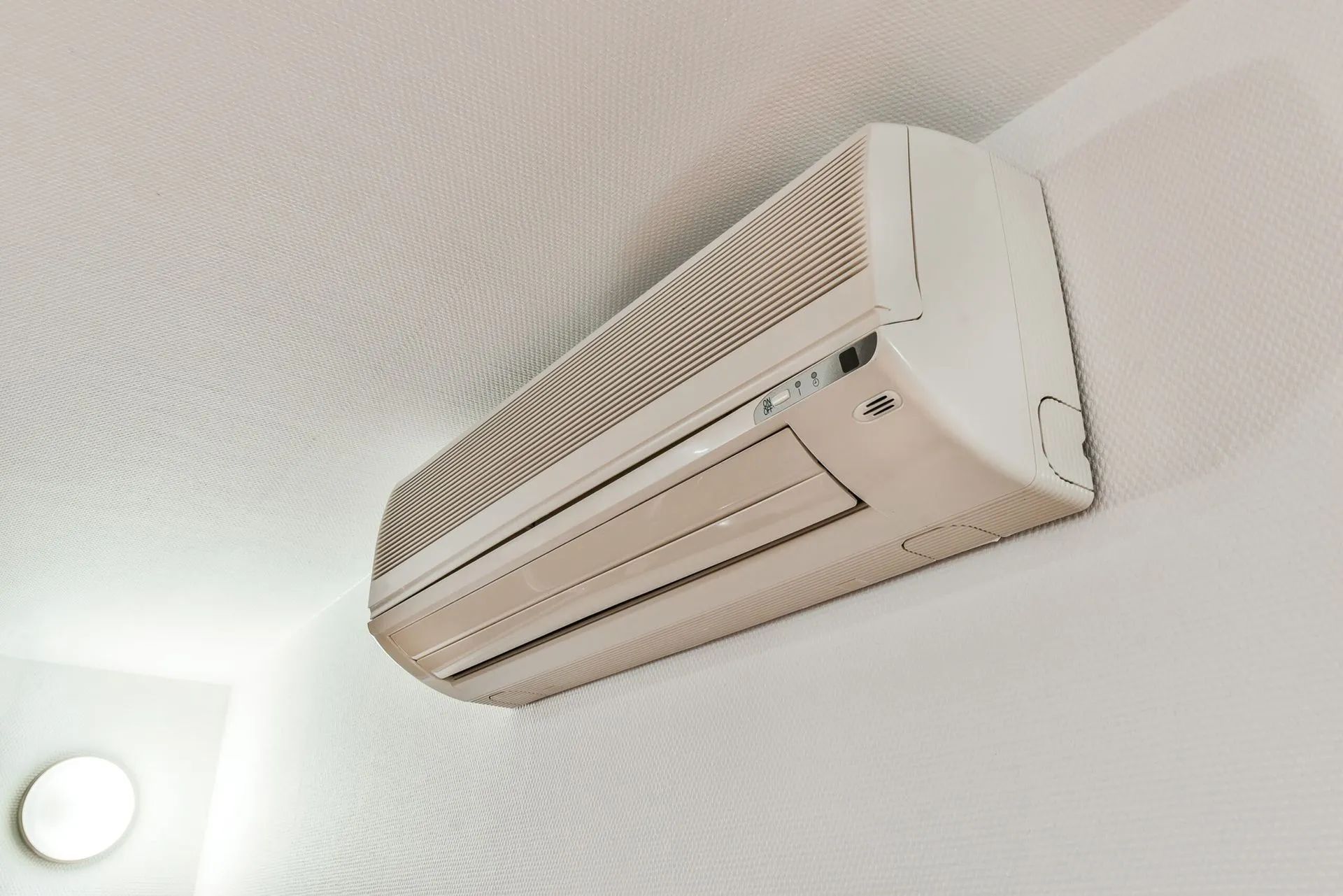
Your air conditioner does two things at once, and most homeowners only think about one of them. It lowers the temperature of the air, and it pulls moisture out of that air as a byproduct of the process. Warm, humid air passes over a cold evaporator coil inside the indoor unit. The coil chills the air, which is the part everyone notices on the thermostat. At the same time, moisture in that air condenses on the cold metal surface, the same way a glass of ice water sweats on a humid afternoon, and drips into a condensate pan, then out through a drain line.
That second job, the dehumidifying part, takes time. Sensible cooling, the drop in air temperature, happens almost immediately once air moves across the coil. Latent cooling, the removal of moisture, needs sustained airflow across a coil that's been cold long enough to condense water efficiently. A system that shuts off the moment the thermostat hits its set temperature might satisfy the number on the wall without ever running long enough to wring meaningful moisture out of the air. That's why a house can feel 74 degrees and still clammy. The temperature is right. The humidity isn't.
Along the Alabama coast, this gap matters more than it does in drier climates. Outdoor dew points here regularly run in the high 60s and 70s through summer, and homes built for the shoulder seasons often struggle once true Gulf humidity settles in for the season. A system that was adequate on a mild spring day can start losing the moisture fight once July and August humidity loads hit full strength.
Check the Thermostat Fan Setting First
Before assuming there's a mechanical problem, look at the fan setting on the thermostat. Most systems give you a choice between "Auto" and "On." Auto means the indoor blower only runs while the compressor is actively cooling. On means the blower runs continuously, whether or not the system is calling for cooling.
Setting the fan to "On" feels intuitive. More airflow should mean more comfort, right? In practice it works against dehumidification. Once the compressor shuts off because the space has reached temperature, the evaporator coil still has condensed water sitting on it. If the blower keeps running with the compressor off, it blows air across that wet coil and re-evaporates the moisture straight back into the ductwork and into your rooms. You end up paying to remove humidity twice: once when the coil pulls it out of the air, and again when the fan puts it right back in.
Tip: Switch the fan setting to "Auto" and give it a full day before judging the results. If indoor humidity drops noticeably once the blower stops running between cooling cycles, the fan setting was working against the system the whole time. No repair needed, just a setting most homeowners never think to check.
Short Cycling: When the System Never Runs Long Enough to Finish the Job
If the fan is already set to "Auto" and the house still feels muggy, the next thing to look at is how long each cooling cycle actually lasts. Short cycling describes a system that turns on, runs for a few minutes, shuts off, then kicks back on again shortly after, instead of running in longer, steady stretches. Every time it shuts off early, it interrupts the slow process of condensing moisture on the coil before that process has done much good.
Short cycling has a handful of common causes. An oversized system is one of the most frequent, and it's a problem baked in at installation rather than something that develops over time. A unit sized larger than the home actually needs will blast the space down to the set temperature quickly on raw cooling capacity, then shut off, long before it's run enough continuous cycles to pull humidity down to a comfortable range. It's efficient at temperature, and poor at moisture. An undersized system can create a mirror-image problem: it runs almost constantly trying to keep up with the cooling load, but airflow and coil conditions never stabilize long enough for consistent dehumidification either.
Beyond sizing, short cycling can stem from a clogged air filter restricting airflow, a failing capacitor or relay causing the compressor to trip on and off, a thermostat sensor reading temperature inaccurately, or refrigerant charge that's off from factory specification. Each of these interrupts the steady operation the system needs to both cool and dry the air properly.
When the Equipment Itself Is the Problem
Sometimes the fan setting is right, the cycle lengths look normal on paper, and the house is still humid. At that point the issue usually lives inside the equipment itself, most often at the evaporator coil, the condenser coil, or the refrigerant charge that connects the two.
A Frozen Evaporator Coil Can't Remove Moisture
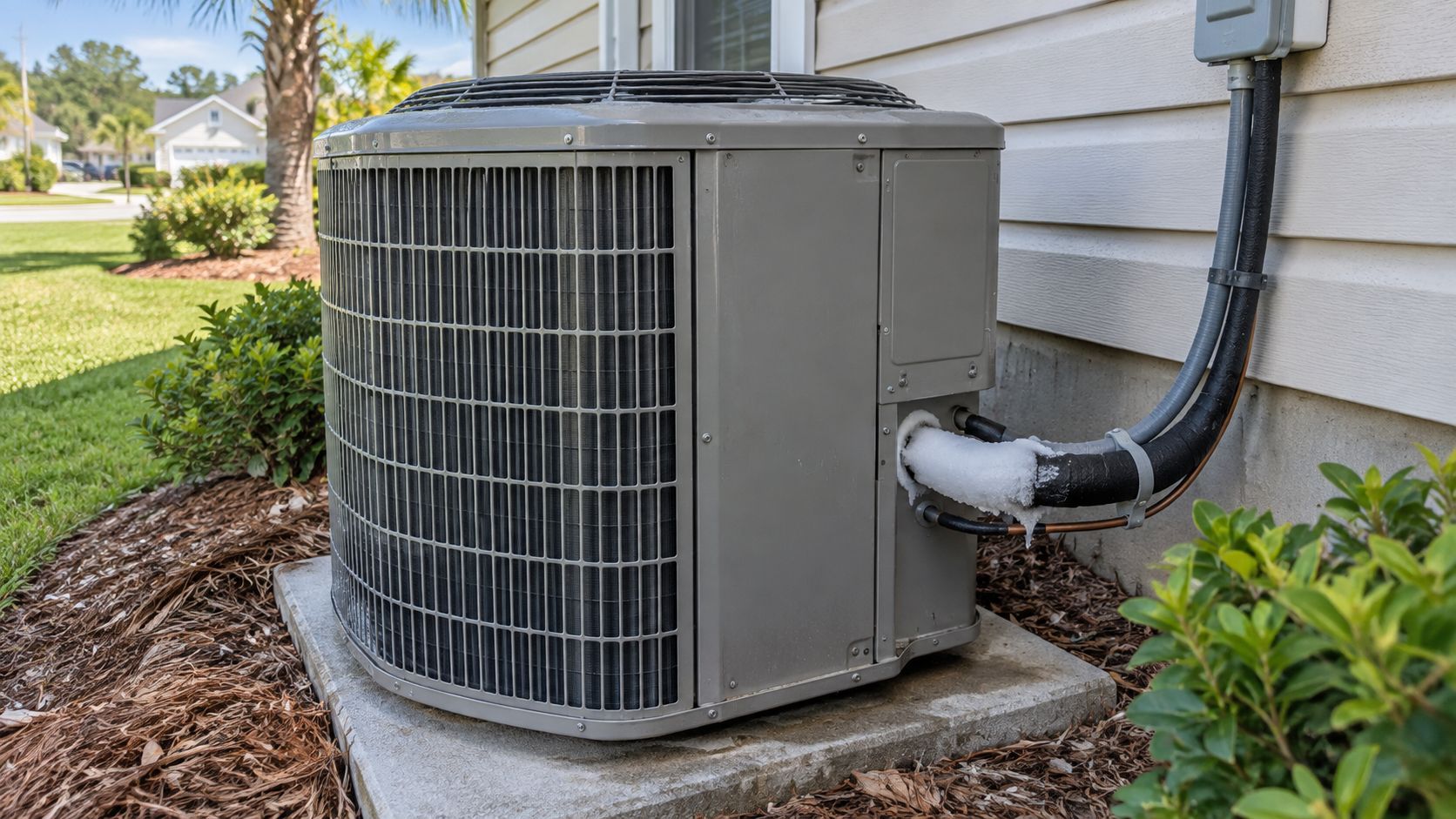
A frozen evaporator coil cannot remove moisture effectively. Restricted airflow from a dirty filter, blocked vents, weak blower, or damaged ductwork can make the coil freeze. Low refrigerant from a leak can cause the same problem. Ice blocks airflow further, leaving the system running constantly while humidity remains high indoors.
Dirty Condenser Coils Force the System to Work Harder
A dirty condenser coil makes it harder for the outdoor unit to release heat. Gulf Coast air brings salt, pollen, grass, and debris that can coat the fins. As heat rejection becomes less efficient, the compressor works harder and longer, reducing cooling performance and disrupting the refrigerant conditions needed for effective indoor dehumidification.
Low Refrigerant Reduces Cooling and Moisture Removal
Refrigerant is not consumed like fuel, so low refrigerant usually indicates a leak somewhere in the system. Reduced refrigerant limits the system's ability to absorb indoor heat and moisture. The result can be long runtimes, weak cooling, and persistent humidity because the air conditioner no longer has enough capacity to perform properly.
Ductwork Can Undo Everything the System Gets Right
Even a perfectly matched, well-maintained system can leave a house humid if the ductwork carrying cooled, dried air has leaks along the way. Supply ducts running through a hot attic or crawlspace can lose cooled air into those unconditioned spaces before it ever reaches a supply vent, while leaks on the return side can pull in hot, humid attic or crawlspace air and mix it into the airstream headed for the coil. Either way, the air actually delivered to your living space carries more moisture than what the system removed at the coil.
Leaky ducts also throw off the pressure balance in a home. Rooms far from the return vent may starve for airflow while rooms closer to it get more than their share, creating pockets that feel stuffier and more humid than the rest of the house even while the thermostat reads a comfortable number.
Warning: Do not run an air conditioner for extended periods once you notice ice on the indoor coil, a copper line, or the refrigerant lines outside. Continuing to run a system with a frozen coil can push liquid refrigerant back into the compressor, which is one of the more expensive components to replace. Switch the thermostat to "Off," not just the cooling mode, but off entirely, leave the fan alone for a few hours to help the ice melt, and have the system inspected before running it again.
Moisture Sources Working Against the System From Inside the Home
Not every humidity complaint traces back to the HVAC equipment. Homes generate and admit moisture from plenty of sources that have nothing to do with the air conditioner directly, and a system that's otherwise healthy can still struggle to keep pace. Long showers without bathroom exhaust fans running, cooking without venting range hoods outdoors, houseplants, aquariums, and even firewood or laundry drying indoors all add water vapor to the air. Gaps around doors, windows, and utility penetrations let humid outdoor air sneak in continuously, especially on breezy coastal days when pressure differences push air through every available crack.
A crawlspace or unconditioned basement without a proper vapor barrier can act like a humidity reservoir sitting right underneath the living space, feeding moisture upward through flooring and framing regardless of what the AC is doing overhead. In these cases, the air conditioner isn't malfunctioning at all. It's fighting a moisture load that exceeds what standard cooling equipment was ever meant to handle on its own.
What Properly Balanced Cooling Should Feel Like on the Gulf Coast
A healthy system serving a Gulf Coast home should cycle in longer, steady runs during peak summer heat rather than short bursts. It should hold indoor relative humidity comfortably in the range health and building authorities generally recommend, roughly 30 to 50 percent, ideally staying below 60 percent to discourage mold growth, and leave rooms feeling dry to the touch rather than clammy even when the thermostat reads a normal setting. Salt air and long cooling seasons mean coastal systems face more corrosion risk and more total run hours per year than equipment inland, which is exactly why coils, refrigerant charge, and airflow deserve more frequent attention here than a general national maintenance schedule might suggest.
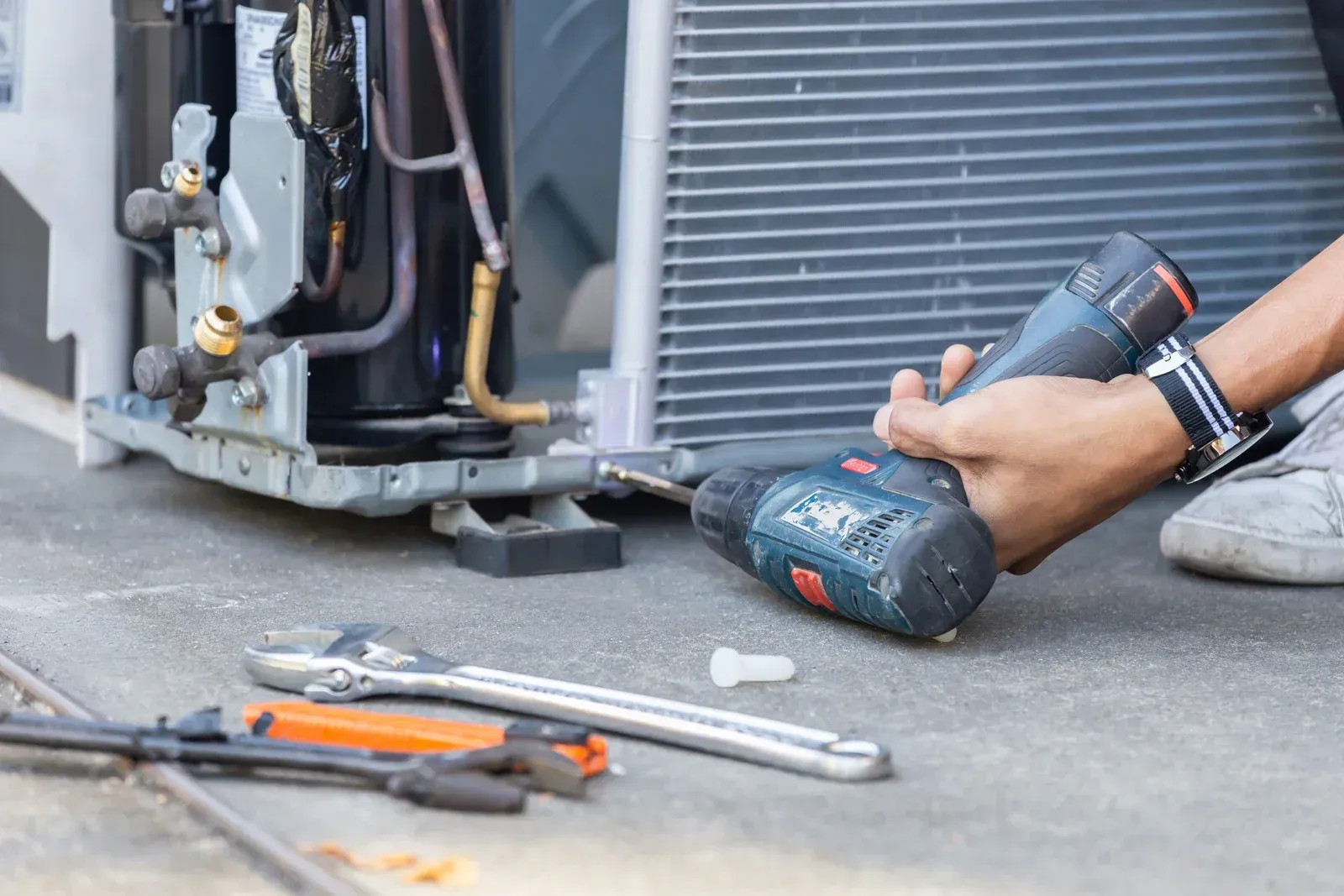
If your system isn't hitting that mark, long runtimes with little humidity relief, or short, choppy cycles that never seem to catch up, the pattern itself is diagnostic information. A technician checking airflow, refrigerant pressures, coil condition, and duct integrity together, rather than guessing at one cause, is the fastest way to find out which piece is actually failing.
Frequently Asked Questions
Is it normal for an AC to run almost all day during a Gulf Coast summer?
Longer AC runtimes are normal during Gulf Coast heat and humidity. Extended cycles help remove moisture effectively. However, nonstop operation without improving comfort may indicate airflow restrictions, equipment problems, refrigerant issues, or incorrect system sizing.
Can a dirty air filter really cause a humid house?
Yes. A clogged air filter restricts airflow across the evaporator coil, potentially causing icing and reducing moisture removal. Replacing a dirty filter can restore proper airflow, helping the AC cool and dehumidify more effectively.
Why does my house feel more humid at night even with the AC running?
Humidity may feel higher at night because cooling demands decrease, causing shorter AC cycles. If the system reaches the temperature quickly but doesn't run long enough to remove moisture, an oversized system could be responsible.
Does a smart or programmable thermostat help with humidity control?
Some smart thermostats offer humidity-control settings that adjust cooling cycles to remove additional moisture. However, effectiveness depends on the thermostat, AC equipment, and system compatibility. Persistent humidity problems may require professional inspection beyond thermostat adjustments.
How quickly should indoor humidity respond once an issue is fixed?
Indoor humidity can improve within a day or two after airflow, refrigerant, or cycling problems are corrected. If humidity remains high afterward, the home may have additional moisture sources, such as leaks, ventilation issues, or crawlspace moisture.
Keeping Gulf Coast Homes Cool and Dry
Persistent humidity is rarely just a comfort issue. When an AC runs constantly without properly drying the air, problems with airflow, refrigerant, coils, ductwork, or system sizing may be preventing it from working as intended. In Gulf Shores, AL, where moisture levels remain high through much of the cooling season, maintaining balanced temperature and humidity is especially important for protecting comfort, indoor air quality, and the home itself.
With 10
years of experience, Wynn Creek AC
serves Gulf Shores, AL, helping homeowners understand why their
cooling system may be struggling with coastal humidity. Looking at the entire system rather than one symptom makes it easier to identify the real source of the problem and restore consistent cooling and moisture control. When temperature and humidity stay balanced, the home feels noticeably more comfortable without putting unnecessary strain on the equipment.