Why Regular HVAC Maintenance Prevents Costly Emergency Repairs
It is the first real heatwave of the season, and your air conditioner just quit during the hottest part of the afternoon. The house is climbing past 80 degrees, the unit outside is humming but blowing warm air, and you are scrolling for answers while the rooms get stickier by the minute. If that is you right now, here is the part that stings: most of the time, the failure that just wrecked your weekend was building for months. A weak part, a clogged drain, a slow refrigerant leak. Something small that a quick seasonal check would have caught long before it left you sweating.
We have pulled apart enough dead systems in August to know the pattern cold. Emergencies almost never come out of nowhere. They are the last stage of a problem that gave plenty of quiet warning. The good news is that the same logic runs in reverse. Catch the small stuff early, and the expensive, middle of the night breakdowns mostly stop happening. That is the whole case for regular HVAC maintenance, and it holds up every cooling season.
Why a Small Fault Turns Into a Full Breakdown
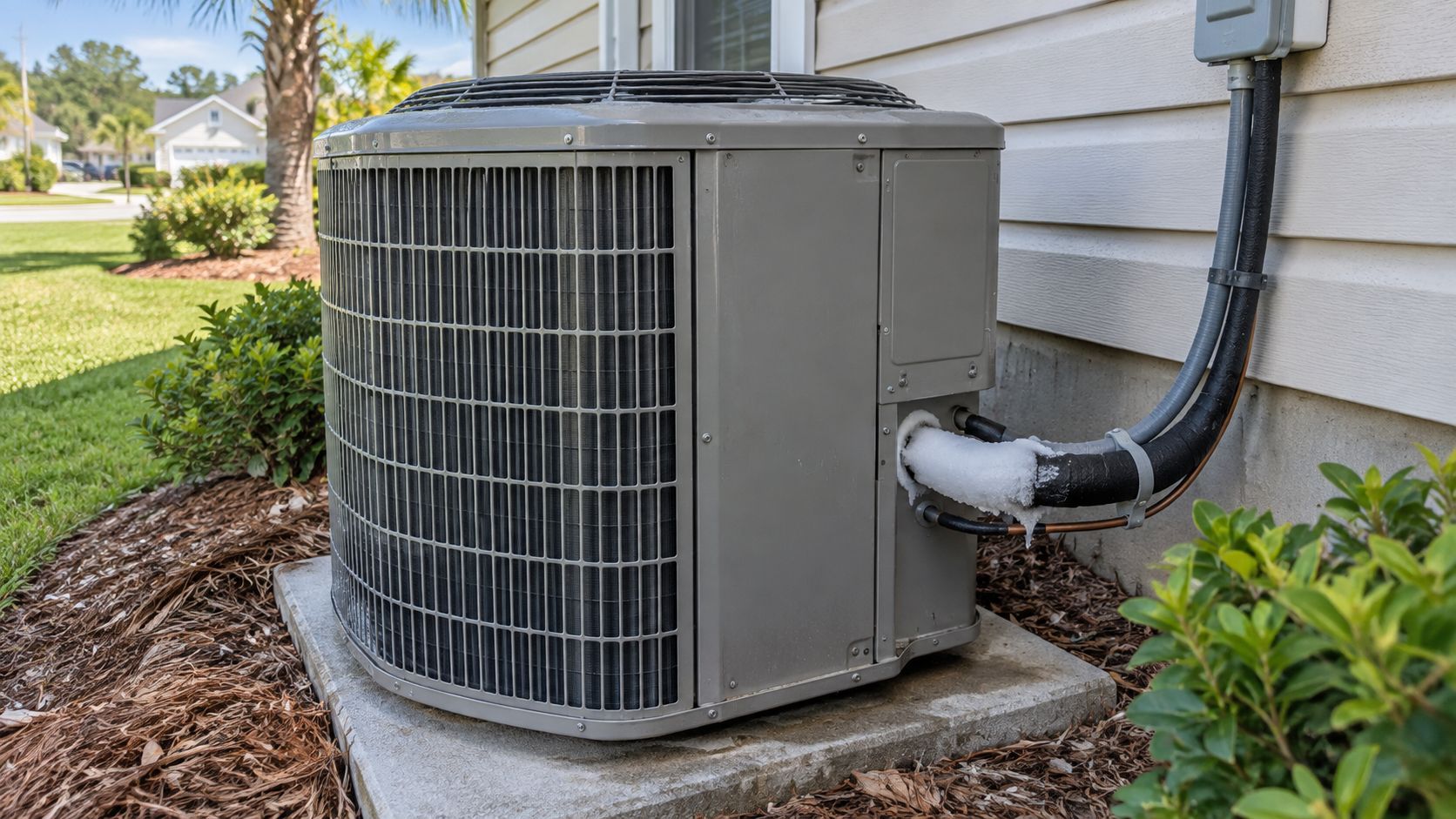
Most emergency repairs trace back to one part overworking because something upstream got ignored. Your system runs as a chain. Airflow feeds the coils, the coils manage refrigerant, the refrigerant protects the compressor, and the compressor is the one part you never want to replace. When a filter clogs, airflow drops. When airflow drops, the evaporator coil gets too cold and ices over. That ice blocks even more air, and now the compressor is straining against a frozen system it cannot cool. Run it like that for a few weeks and you are no longer looking at a dirty filter. You are looking at a burned out compressor.
The same chain reaction starts with a slow refrigerant leak, a dirty outdoor coil, or a tired capacitor. None of these announce themselves loudly. The system keeps cooling, just a little worse each week, until one 95 degree afternoon pushes it past the edge. By then the easy fix is long gone, and a breakdown feels sudden even though the cause was sitting there the whole time.
What a Seasonal Tune Up Actually Catches
A proper maintenance visit is built to find the exact failures that turn into emergencies. We check refrigerant levels against the charge your system was designed for, because a unit running even half a pound low works harder and cools less. We test the capacitor, the part that gives the compressor and fan motors their starting jolt. Capacitors fade slowly in heat, and a weak one is the single most common reason a unit dies in July.
We clean the condenser coil so it can shed heat instead of choking on dust and grass clippings. We flush the condensate drain line, which fills with algae and backs dirty water into the pan or, worse, your ceiling. We tighten electrical connections that vibrate loose over a long season and arc until a contactor burns. Each of these takes minutes to fix during a check and turns into a ruined afternoon when ignored. That gap, minutes now versus a full breakdown later, is the entire point of staying ahead of it.
Why Coastal Heat and Salt Air Wear Systems Faster
Living near the coast puts your system under stress most of the country never sees. The cooling season here stretches close to nine months, so your unit logs far more running hours than one up north that rests half the year. More hours mean faster wear on every moving part, and components that would last a decade inland start showing fatigue years sooner.
Then there is the salt. Air rolling off the Gulf carries a fine mist that settles on the outdoor condenser and eats at the aluminum fins and copper lines. We see corrosion on coastal units that looks years older than the install date. The humidity piles on too. Damp, heavy air keeps the system pulling moisture all day, which means the condensate drain works overtime and clogs faster than it would in a dry climate. A drain that needs a yearly flush inland often needs attention twice a season this close to the water. Staying ahead of it is what keeps a hard working system from aging out early.
A Maintenance Rhythm That Keeps You Out of Trouble
The schedule that prevents emergencies is simpler than most people expect. Once a month, look at your filter and replace it when it is gray with dust, which in pollen season and heavy humidity can mean every three to four weeks. A clean filter is the cheapest insurance you have against the frozen coil problem.
Every few weeks in summer, walk to the outdoor unit and clear away grass, leaves, and anything growing within two feet of it. Rinse the fins gently with a hose to wash off salt and dust. Check the drain line where it exits near the foundation, and make sure water is dripping out while the system runs. No drip during a humid afternoon usually means a clog forming.
Once a year, before the heat really sets in, bring us out for the full check. Spring is the sweet spot, since it leaves time to fix anything before the system runs flat out every day. That single annual visit, paired with the monthly filter habit, catches most problems while they are still small and easy to handle.
The Habits That Quietly Lead to Breakdowns
The most common mistake is treating no news as good news. The system is cooling, so it must be fine. But a unit can run for months while a coil corrodes or refrigerant slowly bleeds out, and the first obvious sign is the day it stops. Waiting for a symptom means waiting for the failure.
Closing vents in unused rooms is another one people do for sensible reasons, usually to lighten the bill. It backfires. Your system was sized for the whole house, and choking off airflow raises pressure in the ducts, strains the blower, and can ice the coil. Leave the vents open.
Then there is the filter nobody checks. Plenty of folks forget it exists until airflow drops to a trickle, and by then the coil has frozen and thawed a dozen times, stressing the compressor each round. A two minute filter check beats every repair that grows out of skipping it. None of these habits come from carelessness. They come from a reasonable read of a system that hides its problems well, right up until it cannot.
Frequently Asked Questions
How often should I schedule HVAC maintenance on the coast?
At least once a year, ideally in spring before the long cooling season starts. Coastal systems run nearly nine months straight and battle salt air, so many homeowners here benefit from a second check in late summer to catch corrosion early.
What are the early signs my system is heading for a breakdown?
Watch for weaker airflow, warm air during peak heat, higher indoor humidity, odd buzzing at startup, or water pooling near the indoor unit. Any of these means a small fault is already at work and worth checking before it cascades into a full failure.
Does a clean filter really make that big a difference?
Yes. A clogged filter is the leading cause of frozen coils and overworked compressors. In pollen season and heavy humidity, filters load up in three to four weeks, so a monthly look is the simplest way to head off major damage.
Why does my unit struggle more than my friend's inland?
Coastal systems work harder. Salt mist corrodes outdoor coils, near constant humidity keeps drains and parts under load, and the long cooling season piles on running hours. Same equipment, much tougher conditions, which is why local upkeep matters more here.
Is it safe to do any of this maintenance myself?
Some of it, yes. Changing filters, clearing debris around the outdoor unit, and rinsing the coil are safe and smart. Anything involving refrigerant, electrical connections, or opening the unit should stay with us, since those carry real shock and damage risk.
Reliable Service From Technicians Who Know Coastal Systems
The whole game comes down to one idea: emergencies are just small problems nobody caught in time, and
regular
HVAC maintenance
is how you catch them. That matters more here than almost anywhere, because salt air, relentless humidity, and a cooling season that barely lets up push systems to fail years before they should. A spring check and a monthly filter habit are what stand between you and a sweltering house in July. At Wynn Creek AC, we keep systems running across Gulf Shores, Alabama, and we have spent 10
years learning exactly how coastal conditions wear equipment down. If your system has not had a real look in over a year, get on the schedule now, before the next heatwave finds the weak spot first.